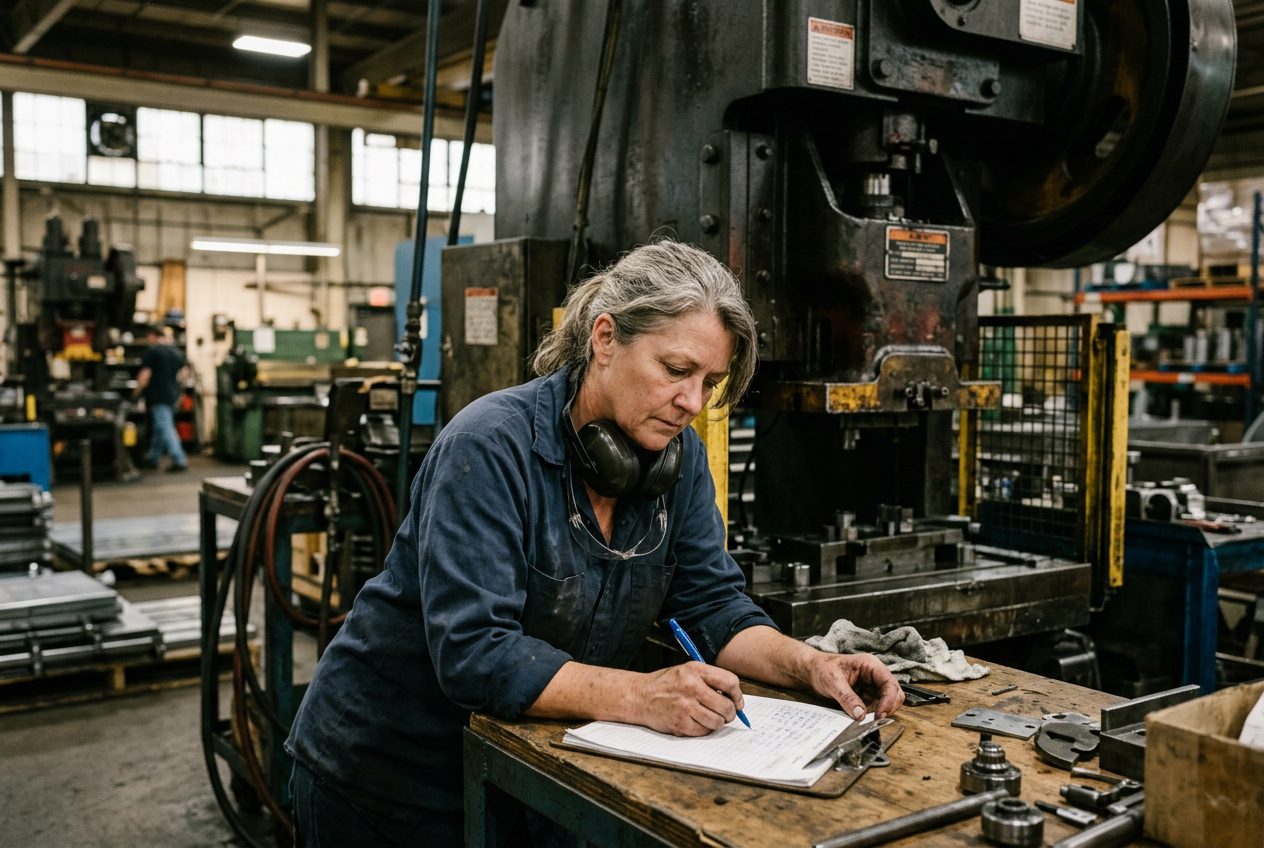
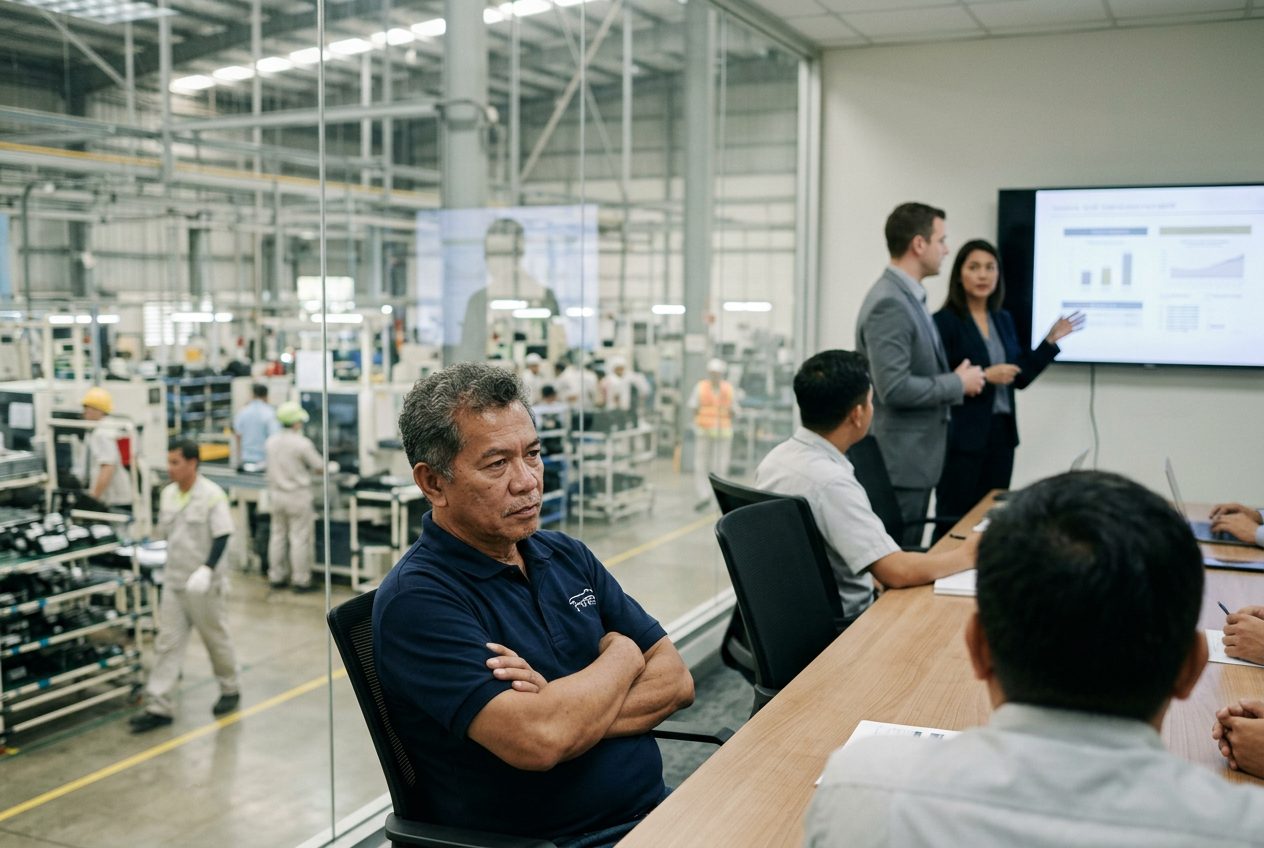
When a plant wants to improve — more output, less downtime, better OEE — the familiar playbook is: hire a consulting firm. A team of smart people in good shoes shows up for six months, interviews everyone, delivers a deck, and leaves. Something changes for a while. Then it does not.
There is a less familiar playbook: put a continuous monitoring system in place, keep it running forever, and make the data available to everyone who can act on it. The math of the two options is very different, and it is worth walking through.
The consulting engagement is a spike
A typical six-figure operations-consulting engagement looks like this on a chart: a big up-front cost (let's say $100,000), followed by a bump of benefit that peaks while the consultants are present and then decays toward zero over the year after they leave. The people who knew the most about your plant go back to their next engagement. The habits they tried to install compete with everything else the team has to do. The charts they built are not updated. Within twelve months, most of the gain is gone.
This is not a failure of consulting — it is the shape of the thing. A one-time project cannot keep working once the project is over. The only way to keep benefits from fading is to put something in place that does not leave.
Continuous monitoring is a line
A production tracking platform does not produce a spike of insight. It produces a steady stream — every shift, every day, every week. The chart looks different: a smaller monthly cost, and a line of benefit that starts modest and slopes up as the team gets better at acting on what they see.
The compounding matters. Month one, operators learn to log downtime at the station instead of on paper. Month two, the top three downtime reasons are visible every morning. Month three, a targeted kaizen is run on the real top reason — not someone's guess. Month six, the team is comparing this quarter to last quarter with trustworthy data. Nothing individual is dramatic. Together it adds up to more than the six-figure project.
When consulting is still the right call
Continuous monitoring does not replace every consulting engagement. A consultant is still the right answer when you are re-engineering a process (not measuring one), when you need an outside executive opinion for the board, or when you have measurement already in place and want a scoped root-cause engagement on a specific problem.
But if the question is "what is happening on my shop floor today and how do we make it better next month" — that is a job for a line, not a spike.
How to decide
Before you write a check for a consulting engagement, spend ten minutes on two things:
- List the questions you would ask the consultants at month 12 to prove their work stuck. If the answer involves "we would need to look at the data" — and you do not have that data — that is the real problem to solve first.
- Run the same ROI numbers for a continuous monitoring tool. A platform that costs a few hundred dollars per location per month and captures downtime and computes OEE automatically is a different kind of purchase than a $100,000 report — and for most plants, the lower number wins on year-one return.
The pitch, simplified
We are not anti-consulting. We are anti-forgetting. If your plant will still be running in three years, the tool that runs every day of those three years is the one that matters. That is what DOVAmfg is built to be.